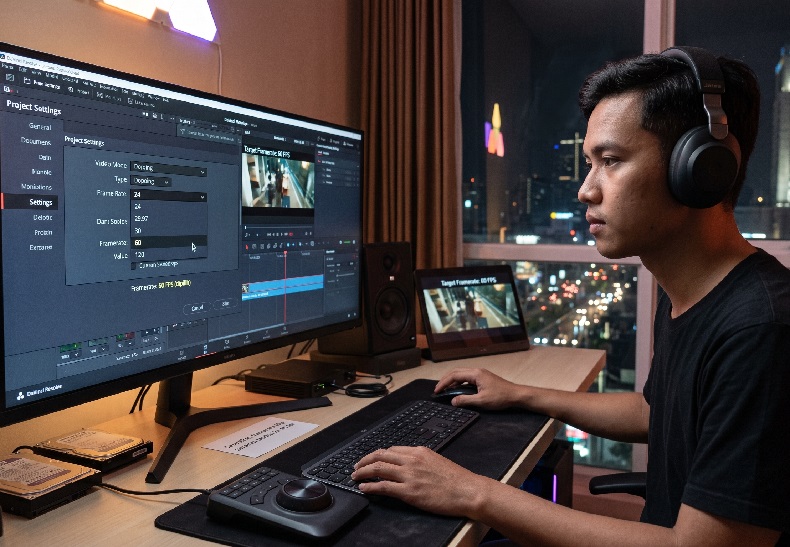
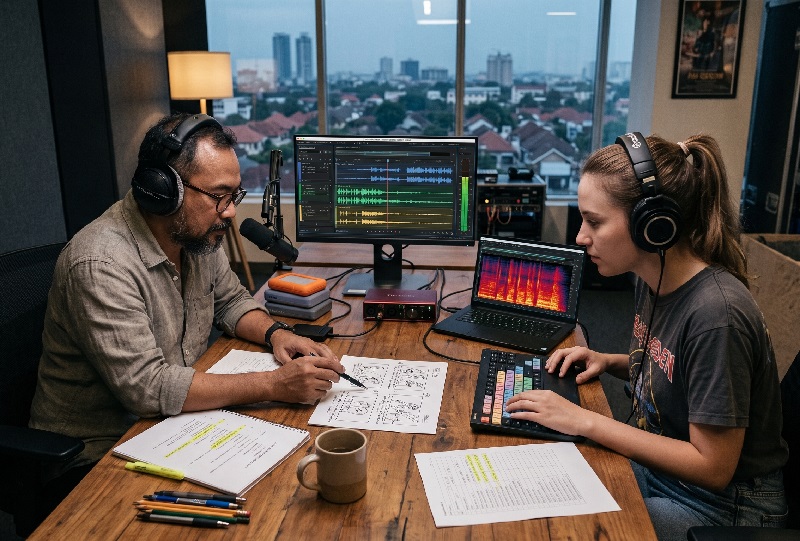
The creative team picks a popular song, the editor drops it in, and the video goes live that same week. Three months later a cease-and-desist letter lands on the legal team’s desk. Video music licensing tends to come last in production discussions, if the team gets around to discussing it at all. Yet a single song holds several layers of rights belonging to different owners.
The losses are layered too. The platform takes the video down, the rights holders claim damages, and the team loses campaign momentum. Audio carries a large share of the viewing experience, as covered in our piece on sound design, so swapping it out midway wrecks the entire rhythm of the ad.
Video Music Licensing Requires Two Permissions
Copyright and Related Rights
Indonesia’s Law No. 28 of 2014 on Copyright separates two categories. Copyright attaches to the composition, meaning the melody and lyrics belonging to the songwriter and their music publisher. Related rights attach to other parties: performers, phonogram producers, and broadcasting organisations.
Using the original recording of a song means you touch both at once. Permission to attach the song to moving images requires the consent of the composition’s owner. Permission to use that specific recording requires the consent of the label or record producer.
What Happens When You Secure Only One
Many brands pay the label and then overlook the music publisher. That combination still leaves the door open to a claim from the party who has not been compensated. Article 9(2) requires permission for every form of economic exploitation, with no exemption for short durations.
Mapping the Permissions Before the Camera Rolls
Types of Permission and Who Grants Them
| Type of Permission | Granting Party | When You Need It |
| Synchronisation | Songwriter and music publisher | Attaching a song to moving images |
| Master use | Label or record producer | Using the original recording, not a re-record |
| Public performance | LMKN or a collective management body | Showing on television, in cinemas, or in public spaces |
| Adaptation | The songwriter | Changing the lyrics, arrangement, or tempo |
Those four rows explain why negotiating a popular song takes months. Each row involves a different party with its own schedule and rate card. Production houses handling commercial advertising usually start these enquiries at the same time as the script is written.
Synchronisation fees themselves move according to several variables. Rights holders calculate the duration of use, the song’s placement, the type of media, the territory, and any demand for exclusivity. A song appearing as five seconds of background costs far less than one that becomes the identity of a campaign.
Misunderstanding the Term “Free Music”
Royalty Free Does Not Mean Rights Free
Misreading the terminology accounts for a great many video music licensing disputes. The term royalty free indicates a single payment with no ongoing royalties. The phrase does not mean the song has lost its copyright protection. The provider platform still sets a scope of use that binds its subscribers.
Check three things before the team locks in a song:
- Media limits, particularly permission for paid advertising and television broadcast.
- How many channels may use that licence simultaneously.
- How long the licence remains valid after you stop subscribing to the platform.
Creative Commons Has Its Own Limits
Creative Commons licences are not unconditional permission either. Variants carrying the NC code prohibit commercial use, which means a product ad automatically breaches them. Variants carrying ND prohibit modification, including trimming a song to fit the video’s duration.
The BY variant also requires attribution in the format the owner specifies. Listing the musician’s name in the description field does not necessarily satisfy that condition. Read the terms, then save a screenshot of the licence page.
The Scope of Video Music Licensing Determines the Cost
Territory, Media, and Duration
A licence agreement always names three principal limits. Territory determines the countries where the video may be shown, and digital ad targeting frequently crosses that boundary without the team noticing. Media separates organic uploads, paid advertising, television broadcast, out-of-home screens, and in-store material.
Duration generally runs for one year from first airing. A commercial advertising budget should therefore include a line for renewal from the outset. Agree that option and its price in the first contract, because your bargaining position weakens once the campaign starts delivering results.
A Cue Sheet Is Mandatory
Television stations and distribution platforms request a cue sheet before material goes to air. That document lists the song title, the writer’s name, the publisher, and the duration of use in each segment. The data becomes the basis for distributing royalties to the rights holders.
Many brands only learn of this obligation on the day the material is delivered. Preparing it during post-production cuts the risk of a delayed air date.
Automated Claims and Legal Sanctions
Content ID Stays Switched On
Even a valid video music licence does not guarantee your video will get through. Audio matching systems work without waiting for a human report. The machine compares your recording against the rights holders’ database within minutes of upload. A claim can still appear even when your licence is legitimate, particularly if the platform has not yet registered your channel.
Register your channel with the licence provider before the campaign goes live. The process usually requires the licence number and a link to the channel, then takes one to three working days. Digital content production teams uploading almost daily run into this obstacle most often.
Article 113 and Real Cases
Article 113(3) threatens infringement of economic rights for commercial use with up to four years’ imprisonment and fines of up to one billion rupiah. The Constitutional Court has heard judicial review petitions on a number of related articles, as recorded in the hearing notes on the Court’s official site.
Real cases make the stakes clearer. The Central Jakarta Commercial Court once ordered a singer to pay Rp1.5 billion in damages to a songwriter. In another matter, investigators named the director of a restaurant chain a suspect for playing songs without paying royalties.
A permissions workflow your team can follow:
- Lock the song choice during pre-production, not while editing is under way.
- Trace the owner of the composition and the owner of the master, then contact both in parallel.
- State the scope of use: media, territory, duration, and type of advertising.
- Build the cue sheet with the editor once picture lock is complete.
- Register your channel with the licence provider before the air date.
Closing the Video Music Licensing Risk
In short, video music licensing demands a mapping of rights, not merely the purchase of an audio file. Two layers of rights, contract scope, the cue sheet, and channel registration determine whether the material runs smoothly. The cost of permission is always smaller than the cost of pulling material that has already circulated widely.
Commissioned music is becoming an increasingly sensible way out. A composer writes an original work, then assigns the economic rights through a contract with a clearly defined territory and term. High Angle raises this option from the first meeting, alongside the script and storyboard. Whether you are a brand owner or a team managing digital content production, that order of work saves money while protecting the company’s good name.
Questions About Music Permissions
- Is using ten seconds safe?
No, because video music licensing applies regardless of how long the excerpt runs. - Does a cover version remove the need for permission?
No, because re-recording only avoids the master licence, while the composition licence still applies. - Why does a claim appear even though the licence exists?
Because the audio matching system does not yet recognise your channel, so channel registration needs to happen first.